Choose an anchor
Start with a material that already matters to the room. It might be the floor you are keeping, a timber dining table or a worktop you love. Using an anchor gives the other choices something to respond to and can make the process less overwhelming.
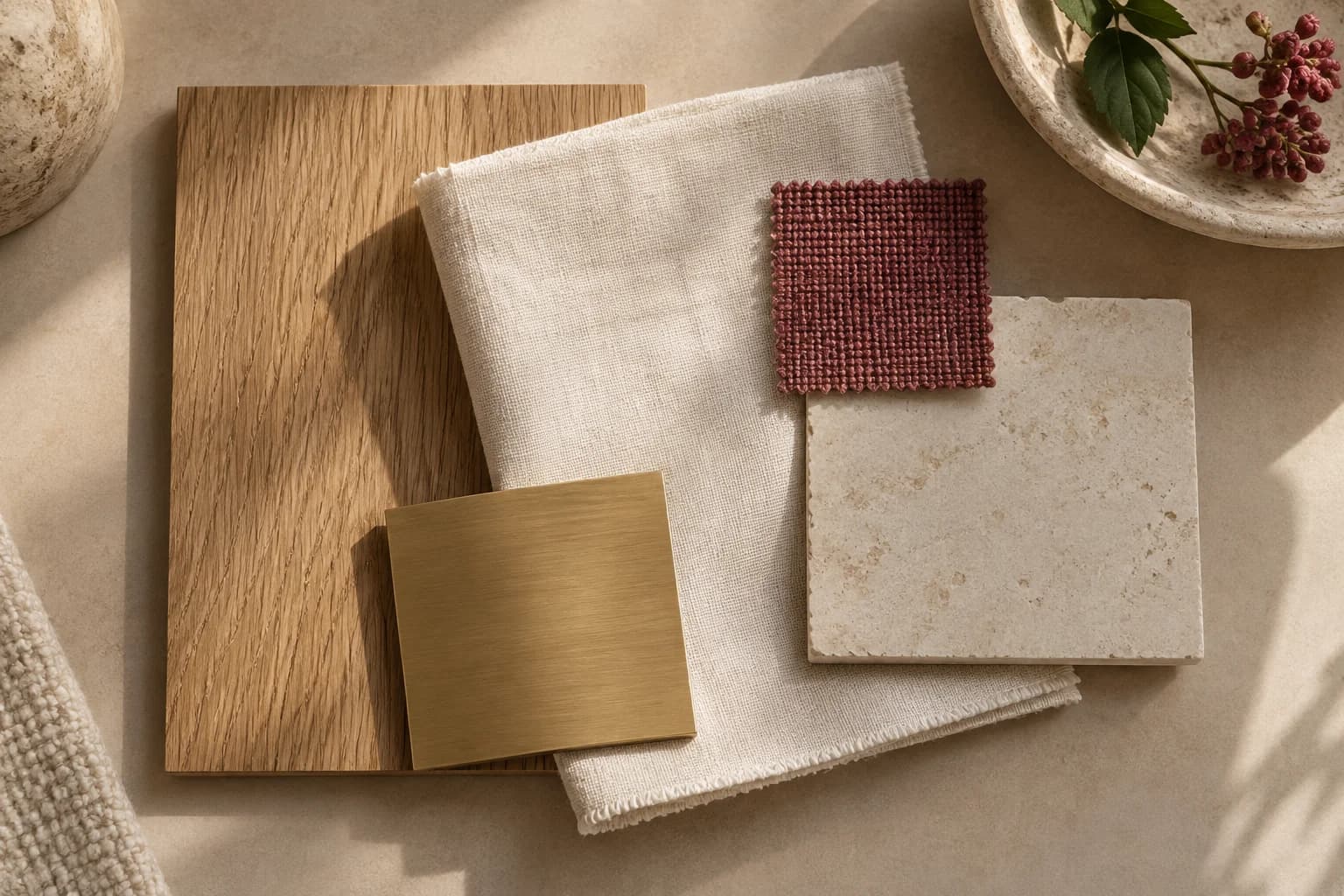
Compare the undertones rather than expecting exact matches. Two woods can work together without being identical, but seeing physical samples beside each other makes the relationship easier to understand. Include existing pieces in that comparison.
Balance smooth and textured
If every surface is glossy, the room may feel very different from one filled with matte and woven finishes. Think about the balance you want. A smooth cabinet front beside a textured curtain can create a gentle contrast without adding another colour.
Keep the number of competing materials manageable. Repeating a finish in a second place can help a room feel connected. More variety is not automatically more interesting if none of the choices has room to be noticed.
Bring samples into real light
Look at samples together in the room where they will be used, at more than one time of day when possible. Daylight and artificial light can make the same surface feel different. A phone photograph is helpful for remembering a combination, but is not a substitute for seeing it.
Consider the scale of the material too. A tiny patterned sample may feel quiet in your hand and much busier across a large wall. Ask for a larger sample or a relevant reference when the pattern is important to the decision.
Talk about care before choosing
Ask the supplier about recommended cleaning, maintenance and expected wear. Discuss how the surface will be used: a dining table, a kitchen worktop and a decorative shelf have different demands. Avoid treating every material with the same care routine.
Keep a simple record of the selected products, finishes and care instructions. A palette that looks good on the first day should also make sense for the people looking after it. That practical side is part of good design.
Every home is different. These notes are a starting point for your own brief, with the details shaped around your space and the people who use it.
Talk through your ideas