Make the beginning and end of the day easier
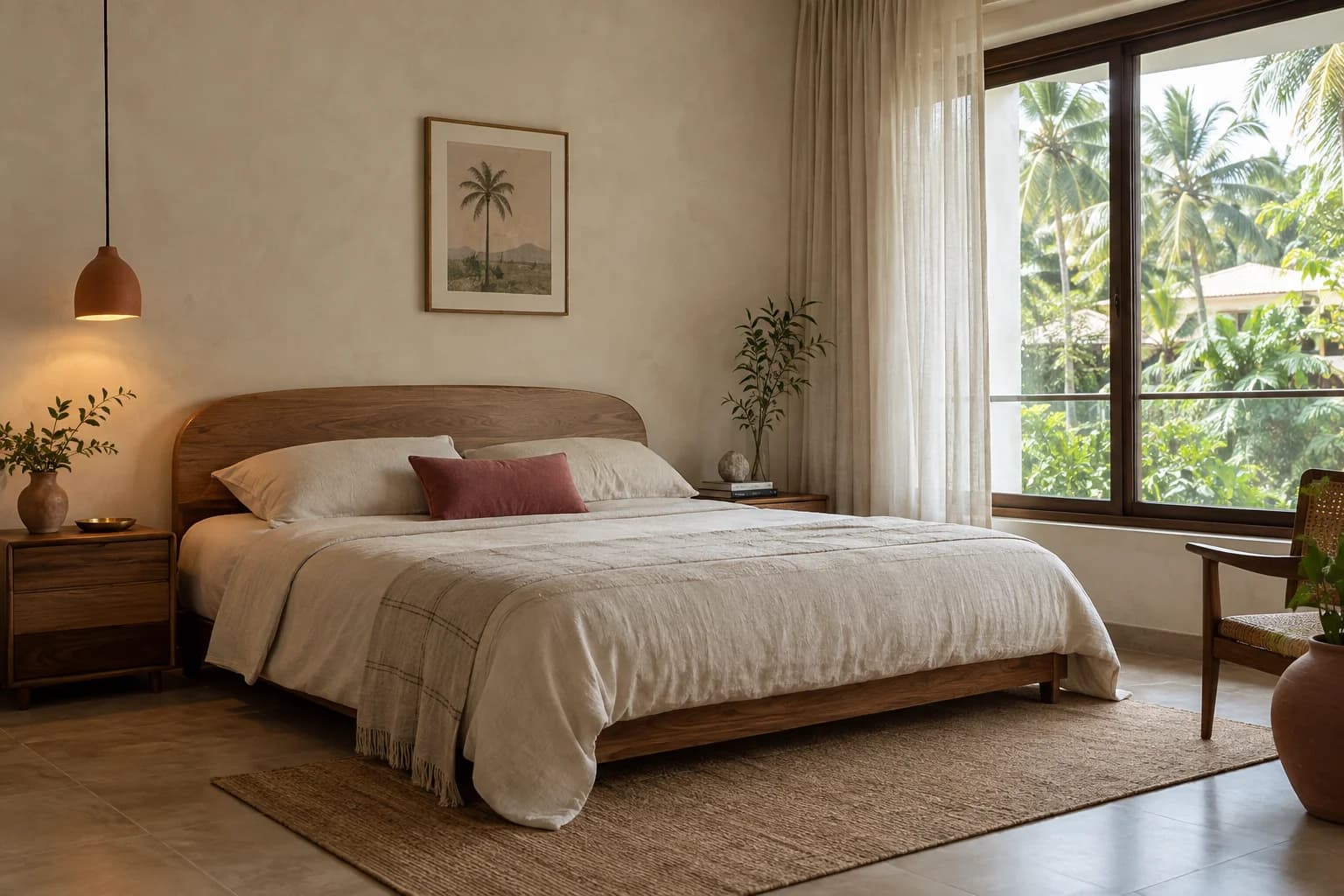
Notice what happens beside the bed. Do you read, charge a phone, keep water nearby or need a place for glasses? Give those ordinary objects somewhere to go. A beautiful bedside table that cannot hold them comfortably may not be the right one.
Look at the route between the bed, wardrobe and bathroom. Furniture should support that movement. If space is limited, a shallow bedside shelf or carefully placed wall light might be worth discussing instead of squeezing in a larger unit.
Choose fewer things to compete for attention
A restrained palette can make the room feel connected, but it need not be colourless. Try one main fabric tone, a supporting neutral and a small amount of contrast. A favourite quilt or cushion can supply the character without every surface needing a pattern.
Texture brings interest when the palette is quiet. Cotton, linen, timber and woven materials can sit together comfortably. Compare samples rather than relying only on the colour shown on a screen.
Think about different kinds of light
The light you want while getting dressed may differ from what you want while reading. Discuss separate lighting needs and convenient controls as part of the plan. Consider window coverings for privacy and the amount of daylight you prefer.
Check where lamps and pendants sit relative to the bed and storage. A lighting choice should feel comfortable in use, not only balanced in a photograph. Let an appropriate professional review electrical changes.
Make storage easy to keep using
The chair covered in clothes usually tells you something about the routine. You may need an accessible place for things that are worn but not ready for laundry. Small, specific solutions can be more helpful than simply adding a bigger wardrobe.
Leave a little room around the bed and on visible surfaces. The aim is not to enforce tidiness, but to make the space easy to return to after a busy day. A bedroom should work for the person who lives there.
Every home is different. These notes are a starting point for your own brief, with the details shaped around your space and the people who use it.
Talk through your ideas